
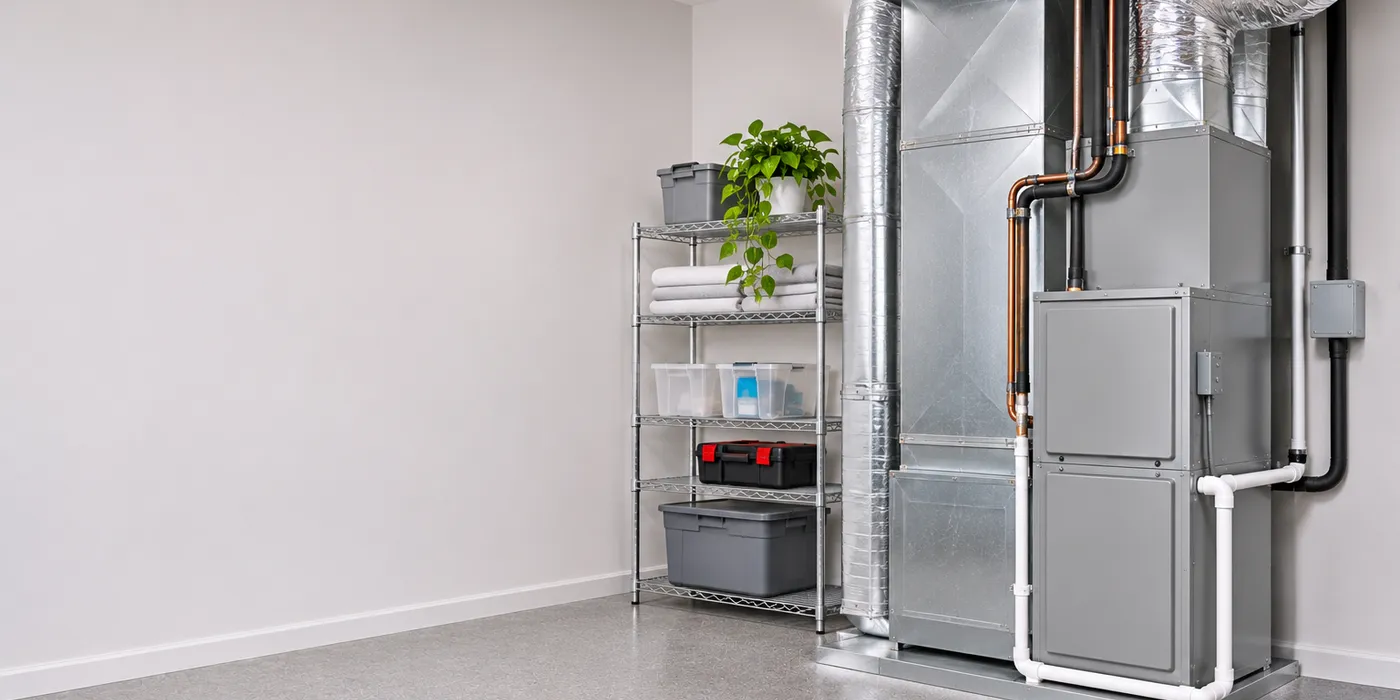
People call us because “dust comes out of the vents,” “the house smells stale,” or “there is black stuff around the grille.” Those descriptions can point to buildup in supply ducts, return ducts, registers, or the air handler cabinet.
We also hear about rooms that get dusty again soon after vacuuming. A return grille can pull lint, pet hair, and loose debris toward the ductwork, then distribute particles through the system.
Duct cleaning usually can be scheduled rather than treated as an emergency. It should not be put off if debris is blowing into rooms, a register has visible buildup, or signs of pests are present in a duct run.
Dust from vents and stale smells
Dust blowing from a supply vent is a common reason to call. So are gray streaks around a register, a stale smell when the blower starts, and loose debris visible behind a return grille.
Some callers notice pet hair collecting at the return vent. Others find construction dust, insulation fragments, or leaves near an outside duct connection. A musty smell can also come from moisture around a drain pan or another component, rather than from the duct itself.
These signs can look similar from the living room, but they do not always have the same source or scope. We inspect the registers, accessible duct runs, and cabinet before defining the cleaning work.
Ductwork inspection
We start the inspection at the supply registers, return grilles, air handler cabinet, and accessible duct connections. We check for loose debris, damaged flex duct, disconnected runs, restricted grilles, and access points for cleaning equipment.
An initial inspection often takes about 30 to 60 minutes. Cleaning accessible supply and return runs can take several hours, depending on the number of registers, the route through the attic or crawlspace, and the amount of buildup.
We remove register covers where needed and clean reachable debris from the ductwork and return path. Cleaning does not automatically mean replacing duct sections; damaged flex duct, sealed access panels, or inaccessible runs may need a separate visit after the needed material is identified.
Access panels and flex duct
The route to the ductwork affects the scope. Registers in open rooms are simpler to reach than runs above a tight attic, behind finished ceilings, or through a crawlspace with limited clearance.
Duct material also matters. Older flex duct can tear if it is brittle, while metal ducts may have sealed joints or access panels that need to be opened and resealed. A disconnected collar, crushed section, or deteriorated insulation changes the work beyond routine debris removal.
The amount and location of buildup matter as well. Debris limited to a few return grilles is different from accumulation throughout supply branches, the plenum, and the air handler cabinet.
Register locations and air handler plate
Before calling, note which rooms have dusty vents, odors, or visible debris. Tell us whether the issue is at a supply register, a return grille, or both.
If you can reach the air handler, look for the model number on its data plate. The plate is often on the cabinet door or side panel, and it helps us identify the equipment layout.
Let us know whether the duct access is through an attic, garage, closet, crawlspace, or ceiling. Mention any recent remodeling, pet activity, water staining, or pest evidence near a grille.
We also need to know whether the blower is running and whether any register cover is loose or damaged. Call Austin Air Conditioning Company at (512) 318-9239 before loose debris keeps circulating through the rooms.
Looking for something else? Try indoor air quality testing or the home page.